How to Make a Large, Empty Room Feel More Inviting
Large rooms are often considered a luxury, but decorating them can be surprisingly difficult. What initially feels spacious can quickly feel cold, unfinished, or disconnected when furniture and décor do not adequately fill the space. Even beautiful individual pieces can appear lost when they lack the scale or arrangement needed to suit a larger room.
Understanding how to make a large, empty room feel more inviting comes down to creating visual structure without sacrificing the openness that makes the space appealing. Strategic furniture placement, thoughtful lighting, varied textures, and carefully chosen focal points can transform an oversized room into one that feels comfortable and intentional.
Break the Room Into Smaller Areas
One of the biggest mistakes people make in a large room is treating the entire floor plan as a single area. When all the furniture is pushed against the walls, the center can become a large expanse of unused floor space. This arrangement tends to emphasize the room's size rather than make it comfortable.
Instead, divide the room according to how it will actually be used. A spacious living room might contain a primary conversation area as well as a reading corner, game table, or small workspace. An open family room could have separate areas for watching television and casual conversation.
These zones do not need physical walls or dividers. Furniture placement alone can establish boundaries. A sofa can separate two functional areas, while a console table can help define the back of a seating arrangement without closing it off.
Use Rugs to Establish Visual Boundaries
Area rugs are particularly effective in oversized spaces because they visually anchor furniture. Without one, chairs, sofas, and tables can seem as though they are floating independently across a large floor.
Choose rugs that are appropriately scaled for the furniture groupings rather than undersized options that exaggerate the surrounding empty space. In a conversation area, for example, having at least the front legs of the primary seating pieces resting on the rug helps visually connect them.
Multiple rugs can also reinforce separate zones in one room. They do not necessarily need to match, but coordinating colors, materials, or patterns can maintain continuity throughout the space.
Bring Furniture Away From the Walls
It may seem natural to push furniture against the perimeter to maximize available floor space. In an already large room, however, maximizing empty floor space usually works against the goal of creating comfort.
Pulling sofas and chairs closer together creates more intimate seating arrangements. It also establishes natural pathways around the furniture rather than forcing everyone to cross a large empty center.
Think about conversation distance when arranging seating. People should be able to speak comfortably without feeling separated by an excessive amount of space. A large room gives you freedom to create generous walkways without sacrificing intimacy.
Create a Strong Focal Point
A large space needs something that gives the eye a natural place to settle. Without a clear focal point, the room can feel visually scattered because every object competes equally for attention.
Architectural features such as fireplaces, dramatic windows, built-in shelving, or exposed beams can provide a natural starting point. If the room lacks an obvious architectural centerpiece, décor can create one.
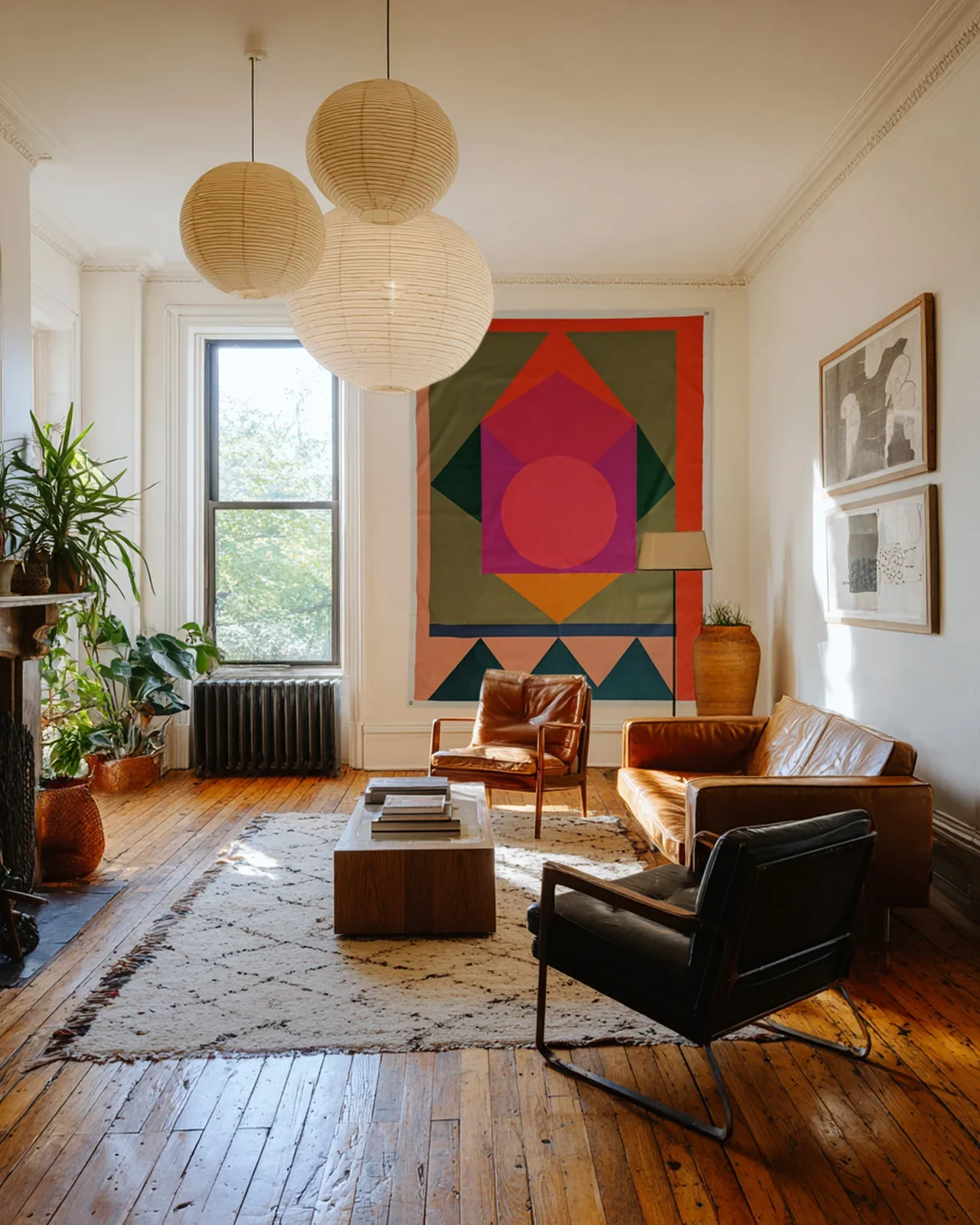
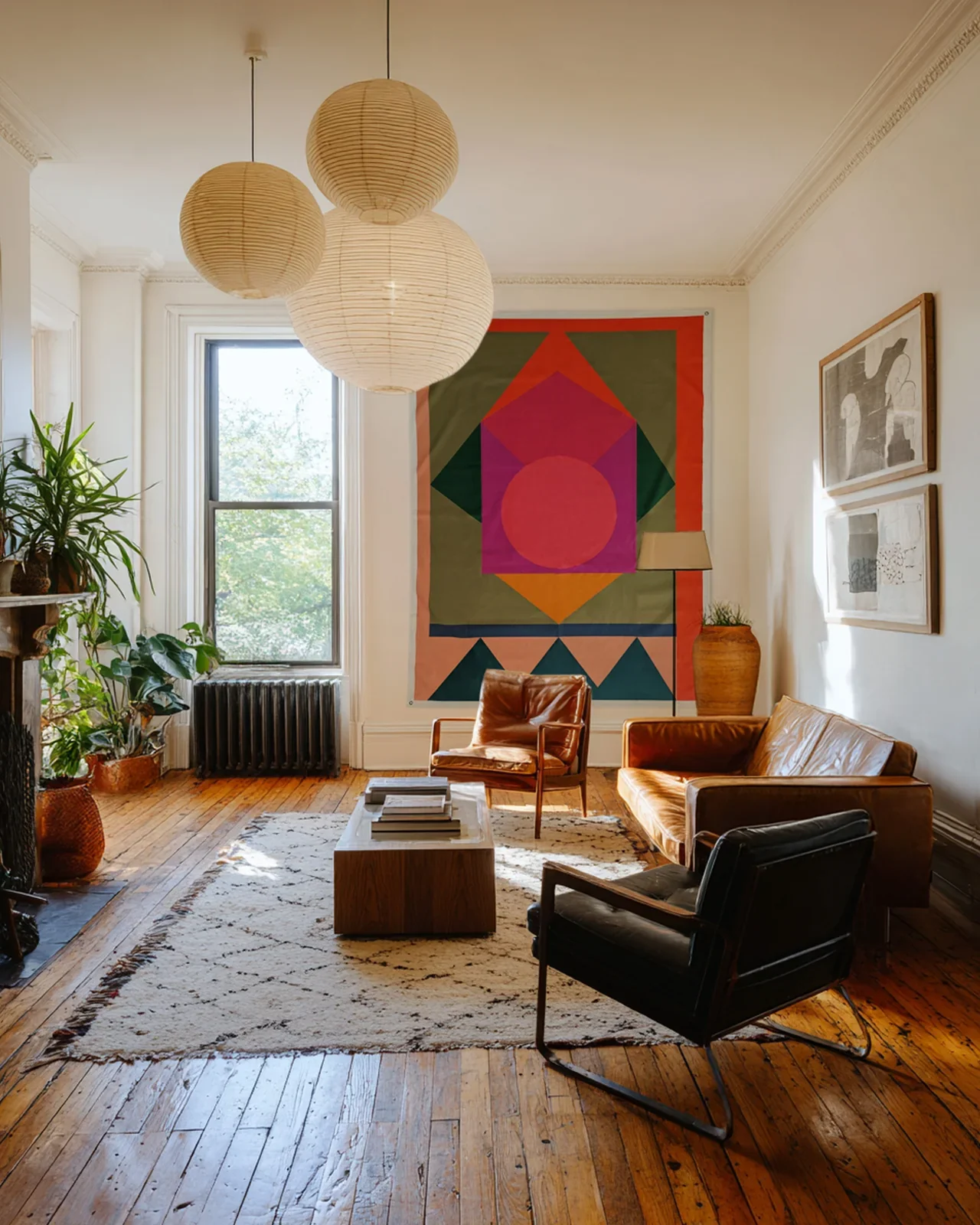
A large piece of artwork is particularly useful because it can fill vertical space while introducing color and personality. Knowing how to use artwork as a focal point can help establish visual hierarchy without requiring major architectural changes. The artwork can then influence nearby lighting, furniture placement, and accent colors rather than existing as an isolated decorative element.
Choose Furniture That Matches the Scale
Furniture that works beautifully in a small apartment may look disproportionately tiny in a large living room. Scale becomes especially important when ceilings are high or the room has an expansive footprint.
Consider substantial sofas, larger coffee tables, wide consoles, tall bookcases, or generously sized accent chairs. This does not mean every piece needs to be oversized. Instead, the major pieces should have enough visual weight to hold their own within the room.
Furniture groupings can also provide scale without requiring enormous individual pieces. Two sofas facing each other, for example, may suit a large room better than one oversized sectional.
Layer the Lighting
Large rooms rarely benefit from relying on a single ceiling fixture. Even a powerful overhead light can leave corners dim while making the center feel overly bright.
Layered lighting allows different parts of the room to feel purposeful. Overhead fixtures provide general illumination, while floor lamps and table lamps create smaller pools of light around seating and activity areas. Accent lighting can draw attention to artwork, shelving, architectural details, or textured walls.
Lighting also affects how the room feels after dark. A collection of softer light sources positioned throughout the space usually creates more warmth than one bright fixture illuminating everything evenly.
Introduce Texture and Softness
Large spaces often contain substantial amounts of hard flooring, blank walls, and open air, all of which can contribute to a cold atmosphere. Textiles soften these surfaces visually and can improve acoustics at the same time.
Curtains are especially valuable when a large room contains tall windows. Hanging them high and selecting panels with enough fabric to appear substantial helps complement the room's proportions. Bare windows, by comparison, can make an expansive wall feel even emptier.
Throw blankets, upholstered furniture, cushions, rugs, and fabric lampshades add additional layers. Combining materials such as linen, wool, leather, wood, and woven fibers prevents the room from appearing flat without requiring excessive decoration.
Take Advantage of Vertical Space
High ceilings can make a room impressive, but they can also create a disconnect between the furniture and the architecture. If nearly everything stops a few feet above the floor, the upper portion of the room may feel forgotten.
Use taller elements to connect the lower and upper portions of the space. Floor-to-ceiling curtains, tall plants, substantial bookcases, vertical artwork, and statement lighting fixtures can draw attention upward.
The objective is not to fill every section of every wall. Some negative space is useful because it gives decorative features room to stand out. The goal is simply to ensure that the room feels intentionally designed from floor to ceiling.
Bring Everything Together With Intention
The challenge of making a large, empty room feel more inviting is not really about finding enough things to occupy the available square footage. It is about creating relationships between the elements already in the room.
Furniture groupings establish comfortable areas for people to gather. Rugs provide visual boundaries. Lighting creates atmosphere, while artwork and architectural features guide attention. Textiles, plants, and personal objects introduce warmth and character.
A successful large room should still feel spacious when the decorating is complete. The difference is that the openness now feels intentional rather than empty. By balancing scale with intimacy and giving each part of the room a purpose, an expansive interior can become one of the most comfortable and welcoming spaces in the home.