Waterproof vs. Water-Resistant: Finding the Best Flooring for Kitchens, Bathrooms, and Mudrooms
The folks who genuinely could use a waterproof floor don't buy waterproof floors. That's because the current generation of "waterproof" floors are not waterproof the instant water seeps through the seams. To be fair, the manufacturers of this flooring never actually claimed to have invented a waterproof flooring. The term 'waterproof' is actually speaking about the "surface" of the product.
What waterproof actually means at the core level
Waterproof actually means no liquid can reach the core of the plank, period, even if it sits on the surface for hours. Water-resistant means the floor can handle a spilled glass of water wiped up within a few minutes, but standing moisture will seep through seams, edges, or an unsealed surface.
This becomes important because most flooring these days falls somewhere between those two poles, and the box won't tell you the specific fine print that applies to your install. It's quite possible for a vinyl plank to have a 100% waterproof core and still fail in a wet room because the seams between planks are not tight or sealed. The core is half the equation. The quality of the installation is the other half, and it's the half most buyers never thought to ask about.
Read the warranty before you trust the label
Here's the thing most homeowners learn the hard way: many warranties on "waterproof" luxury vinyl plank explicitly do not cover damage from water that seeps or migrates between planks via the click-lock joints. The manufacturer will tell you that the core won't absorb water, but they're not willing to bet the farm on the seams.
This isn't a loophole exactly - that's physics. A click-lock floating floor goes down like a giant puzzle made of individual pieces that interlock along a groove. This groove is a mechanical connection, not a welded seal. Water left long enough on the surface will find the path of least resistance, and that path is almost always the seam.
Before you buy, ask for the warranty language on water damage, not the sales sheet summary. If the warranty carves out an exception for "water intrusion at seams" or "improper installation," you know to ask more questions about the installation method, not the product spec sheet.
SPC vs WPC and the wear layer number that actually matters
There are two main types of vinyl plank flooring, and the distinction between the two affects the real-world performance of the floor rather than just the difference in how it feels when you walk on it.
Flooring with SPC (stone plastic composite) cores is made with a dense, rigid, and heavily mineral-laden limestone composite that resists temperature swings and holds up even when lower-grade flooring would dent beneath the pressure of a couch or a bed. WPC (wood plastic composite) cores use a foaming agent that makes the planks thicker and softer, adding an air of cushioning comfort that can transform a kitchen or laundry room. The trade-off is that the foaming agent can cause planks to soften slightly and shift under sustained heat or even, in extreme cases, warp, which is an issue around sunny windows and heat vents.
The other number worth asking about is wear layer thickness. A thin 6-mil wear layer might survive a quiet guest bedroom, but it won't hold up to a family kitchen or a mudroom with a dog that sheds grit off its paws all winter. For those spaces, 12 to 20 mils is a realistic floor, not an upsell. Anything thinner and you're paying for waterproofing on a surface that will scratch through before the water resistance ever gets tested.
Porcelain tile and the grout problem nobody mentions
Porcelain tile is the most waterproof flooring option on the market. In general, porcelain is best suited for floors especially in baths because of its low water absorption rate (under 0.5%). Ceramic tile could be an option, but because of its greater water absorption rate, it is best used in glazed form. Ceramic is also less dense than porcelain, making it more likely that water could penetrate the surface if not properly sealed.
The truth is that tile isn't the usual failure point in bathroom flooring - it's the grout. Cement-based grout is porous. It acts like a tiny wormhole through which water gradually seeps into the substrate over time. Epoxy grout is more waterproof with regular grout being perfectly fine provided it is sealed annually (most people don't even know to do this, much less do it). If an installer has done everything right but fails to mention grout sealant to the homeowner, the beautiful new tile floor has probably been installed perfectly with a minor detail undermining it.
The hidden water traps: seams and beveled edges
Beveled edges, the slight V-groove cut into the long side of a plank, create a shadow line that looks great and hides a small problem: that groove sits below the top of the wear layer, and it can hold a thin film of standing water longer than a flat surface would.
Combine a beveled edge with a click-lock seam near a bathroom vanity with a slow drip, or a mudroom door where snow melts off boots every time someone walks in, and you've got the exact conditions that quietly defeat an otherwise "waterproof" floor. None of this means avoid beveled or click-lock products. It means ask your installer whether they're sealing the perimeter and locking mechanisms in wet zones, particularly around toilets, tubs, and exterior doors. A five-minute bead of sealant at install time solves a problem that would otherwise take years to show up and cost far more to fix.
Test it before you buy it
Specifications are helpful, but they are also created by the individuals who are trying to sell you the flooring. Before you make a decision about a kitchen, bath, or mudroom product, subject it to the boring test: cut or request a sample, place it in a shallow dish of water and leave it there overnight, then flex it the next day. If there's no buckling or delaminating, the core is truly waterproof. A water-resistant core will often swell or soften, even if the box says otherwise.
Look for the ASTM D 570 water absorption rating on the spec sheet - a reputable manufacturer will have it - and pull apart a sample click-lock plank in the showroom and stare at the seam beneath a light. Do you see a gap? Do you see finished edges with micro-beveled faces and routed grooves? If the seams look unfinished, they are. This is the kind of comparison shopping you need to do in the real world, because you can't tell quality off a JPEG. That's one reason it's worth walking the aisles at a store like Stine Home + Yard and talking to someone who installs these floors for a living rather than someone who just stocks them.
Room-by-room verdicts
Kitchens must have cores that are completely waterproof, no discussion. With the dishwasher, a water line to the refrigerator, and the sink, a kitchen has more water sources per square foot than almost any other room, and the water often goes from cold to hot, meaning invisible steam can escape into the walls. Water damage and freezing cause about 30% of all homeowners' insurance claims (Insurance Information Institute), and that unheated portion behind the cabinetry under a granite countertop? That's where that slow leak will go undetected.
Bathrooms need porcelain tile with sealed grout or fully waterproof vinyl with sealed seams, and you need to use a rug (not a towel) as well as having an actual working vent. A fan that runs long enough to clear the humidity will do more for the floor beneath your feet than any upgrade you can buy.
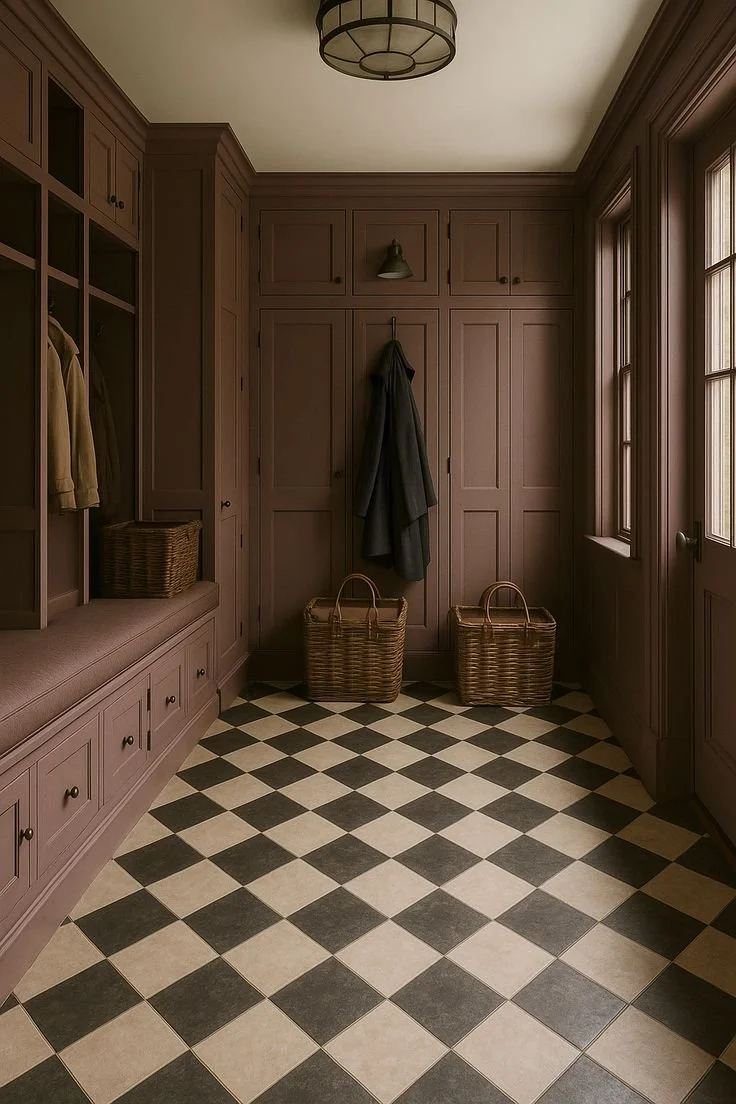
Mudrooms require SPC-core LVP with the thickest possible wear layer, because grit and claws are harder on a mudroom floor than moisture. Snowmelt is relevant, but it's daily abrasion from boots and dog nails that actually shortens the life of your floor in that room.
Waterproof laminate and the resale trade-off
"Waterproof laminate" is a thing now, made with plastic-impregnated cores and moisture barriers instead of the old fiberboard that swells at the first hint of humidity. It looks great and gives you a deeper wood-grain texture than most vinyl. It costs more than comparable LVP, though, and still relies quite a bit on careful seam sealing during install, so it's really only worth the upcharge if you're determined to get that laminate look in a semi-moist room, not standing water.
On the resale side, hardwood has always recouped more of its cost at sale than any other flooring type. However, that advantage instantly vanishes the moment water gets involved. A beautiful solid hardwood floor that cups after a slow leak is not an asset anymore, it's a repair bill. The smarter split is hardwood in dry, high-traffic living areas where its resale value actually holds up, and premium vinyl or tile in the rooms where water is a constant risk rather than a rare accident.
Choosing flooring for a kitchen, bathroom, or mudroom isn't about finding the prettiest plank in the showroom. It's about knowing where water actually gets in and picking a floor built to stop it there, not just on the surface where the sales pitch happens to be looking.