Why True Inclusivity in Tourism Requires More Than Just a Rainbow Flag
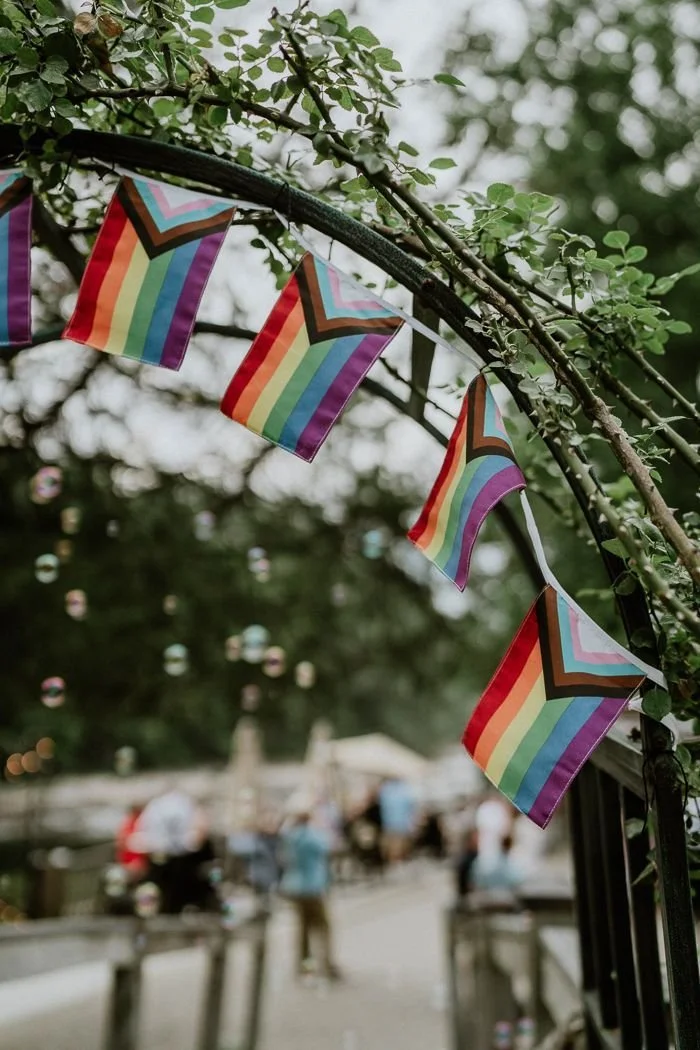
A hotel can display a pride flag in its window and place a welcome note in all the wedding brochures it prints, but if the staff is inadequately trained on the needs of queer travelers and freezes up when faced with another man demanding "Where's the Mrs.?" it's all for nothing. A destination can launch a glossy campaign featuring a happily married lesbian couple at sunset, but if the country's laws are such that their marriage isn't recognized and one half of the couple ends up in a hospital room with no recourse for a lack of spousal visiting rights, the marketing wasn't just misleading. It was cruel.
Airlines, tour operators, and hotels have all begun to optimize their messages and policies for LGBTQ+ travelers, a market that by some estimates is worth $211 billion within the U.S. alone. They have joined in Pride parades. They write rainbow ads. They sponsor queer events and struggles. But in too many cases, this is a terabyte of representation and a kilobyte of actual care, much less justice.
What Rainbow Washing Actually Looks Like In Practice
Rainbow washing is not a new concept, but it's important to define what this concept looks like in practice, as the travel sector has developed enough to transform superficial marketing into something that feels real.
It means that a luxury hotel with a homepage dedicated to pride has forgotten to update its booking form to provide non-binary gender choices. It means that a destination management company advertises itself as LGBTQ+ friendly because it once organized a gay wedding, but its drivers and local guides have never received any training in this area of diversity. It means that the same hotel receptionists give two women who have just checked in their key cards and wish them a pleasant stay as "ladies", and then ask who will be taking the room under her "maiden name".
The IGLTA has developed accreditation criteria and resources for travel professionals and operators who would like to go beyond just sticking. However, being accredited only makes sense if the entire chain is covered, including the marketing department, as well as the properties that appear in the photo brochure. Most hospitality businesses do not meet this requirement, not because they are unfriendly, but because nobody has ever spoken to them about this before.
The hospitality experience thus becomes a series of microaggressions, those small signals that make it clear that a same-sex couple is not anticipated. Assuming that two men traveling together would like to have two separate beds booked. Addressing a couple as "you and your friend" during the welcome speech. Asking a transgender guest at check-in to repeat the name as it is not on the passport. None of this is done with bad intentions. All of it is extremely draining. And none of it would happen at a property where the declared values have actually been implemented.
Why Milestone Travel Amplifies Every Risk
Most LGBTQ+ travelers operate with a kind of low-level vigilant feeling. You check out the restaurant before you grab your partner's hand. You test the pulse of a neighborhood before deciding your visibility. It's not paranoia - it's a learned response that is formed from past experience.
Planning a wedding or trip doesn't turn that vigilance off. If anything, it reinforces it. You're spending more, sharing more emotion and involving more people - possibly uncomfortable family members, a wedding party to alert to the situation, vendors to prep. The room for error is practically nil.
For 71% of LGBTQ+ travelers who say the travel industry's bias and discrimination affects where they go, and 80% who actively think about their safety and wellbeing while planning a trip - that's not a minority feeling. That's the default setting for most queer travelers when they make a major travel decision.
Booking a wedding across borders as a couple, what that translates to becomes quite apparent. Is it safe to engage in PDA when visiting the venue? Will the staff have a problem with two grooms? If something goes wrong - sick, legally, stranded - will the couple be recognized as a family or as two individuals without ties?
The Vendor Chain Problem
A resort's corporate commitment to diversity doesn't automatically transfer to every vendor in its supply chain. The hotel itself may be genuinely excellent - well-trained staff, thoughtful design, no microaggressions at the property level - but the ground transportation company it uses may not share those values. The off-site excursion operator, the florist sourced through a local coordinator, the photographer recommended by the concierge - all of these are third parties operating with their own culture and assumptions.
Reviewing the entire supply chain involves human connections, not just online research. It means knowing which local suppliers have truly worked with same-sex couples and performed successfully, rather than knowing which ones will agree when asked if they are comfortable with it. These are two very different scenarios. A supplier who has been involved in a dozen same-sex weddings in the past three years knows what to do and how to do it. A supplier who has never worked with a same-sex wedding but doesn't want to lose the contract will say whatever you want to hear.
This is where it is truly valuable to work with a gay travel company that has spent years forming those local relationships. It is not about convenience; it's about your safety. The research has been done. The relationships are there. Should anything go wrong - and with a trip this elaborate, something always goes wrong - you have a network you can rely on.
The Legal Patchwork No Glossy Brochure Mentions
One of the least-discussed complications in destination wedding planning for same-sex couples is the legal question. Marriage equality exists in some countries and not others, and the map is genuinely complicated. Many of the world's most photographed wedding destinations - white-sand beaches in the Caribbean, hilltop villas in parts of Asia, coastal settings across parts of Africa and the Middle East - are in countries where same-sex marriage is not legally recognized, and in some cases where same-sex relationships carry criminal penalties.
This means couples often face a choice: have a symbolic ceremony in a stunning location and handle the legal paperwork separately at home, or limit their destination options to the shorter list of places where the ceremony itself will be legally valid.
Neither option is inherently wrong. A symbolic ceremony in a dream location, with the legal formalities handled back home, is a completely legitimate choice. But it needs to be a conscious choice, not something couples discover after they've already fallen in love with a venue. Travel advisors who specialize in this space know to surface that conversation early. Generalist platforms often don't raise it at all.
The Asher & Lyric Safer Travel Index is one of the more useful tools for assessing a destination's safety profile before booking, rating countries based on legal protections, social attitudes, and enforcement realities. No single index tells the whole story, but cross-referencing a destination's romantic appeal against its actual legal environment is a step that shouldn't be skipped.
Beyond The "G": What Inclusive Travel Design Actually Requires
There is a consistent issue with how the travel industry perceives LGBTQ+ travelers: it focuses on gay men and doesn't look beyond that. Pink tourism was essentially developed based on the disposable income and preferences of cisgender gay men. This remains the foundation for everything, ranging from the destinations that are promoted to the way hotels that claim to be "inclusive" develop their services and facilities.
Trans and non-binary travelers face another different, and mostly more difficult, set of obstacles. Depending on the technology and staff guidelines, airport security can be a major stressor for trans passengers. Bathrooms, changing rooms, and spa offerings that are separated by gender and lack flexibility create friction for trans and non-binary travelers, that cisgender travelers don't experience. Name mismatches in passport papers and the chosen name may complicate the check-in process well beyond mild discomfort.
Queer women are also regularly left behind. The design premises implied in luxury travel do not automatically fit a lesbian couple - honeymoon packages catered to a man and a woman, spa marketing promotions directed at "couples" with a noticeable gender binary, welcome presents that assume a heterosexual context. All of these need to be actively redesigned if they are to suit a same-sex female couple. Active redesigning does not take place unless otherwise requested or prioritized.
In order to design travel in the spirit of true inclusivity, we need to ask: Will all groups of people be served by this? Or are we just aiming at the easiest target group to make profit out of?
The Economics Are Real But Loyalty Has To Be Earned
The queer travel demographic spends a lot, and travels often, and is quite loyal when they feel their loyalty is deserved. It's not new information. Travel companies have known this for decades. But noticing that commercially while doing minimal work operationally is exactly the dynamic that creates rainbow washing in the first place.
The market has gotten smarter. LGBTQ+ travelers can spot performative marketing better than they could ten years ago. They read the reviews, they compare notes in online and IRL community spaces, they notice when a hotel's pride content disappears in September. They can tell the difference between a company that markets to them and a company that has actually built its business with them in mind, and it's an easier decision to support the latter.
Couples planning a wedding aren't going to give the benefit of the doubt to the company that just got the aesthetic right - they want the receipts. And the receipts are real itineraries, real relationships with suppliers, real knowledge of destination-level safety considerations. That's a higher bar than a rainbow logo, and it's exactly the bar that needs to be set.
What The Industry Needs To Actually Change
The flag is easy. The internal staff training program isn't. The inclusive booking form isn't. The vendor relationships built over years of focused work in specific destinations aren't. These things require time, money, and organizational commitment that goes well beyond a seasonal marketing push.
Progress exists. Some properties and travel specialists have done the work and can demonstrate it substantively. But they're still a minority within an industry that has broadly decided the visible signals of inclusion are sufficient. For travelers whose safety and dignity depend on the gap between appearance and reality being as small as possible, that's not nearly good enough.
Planning a wedding should feel celebratory. Not like a risk assessment.